

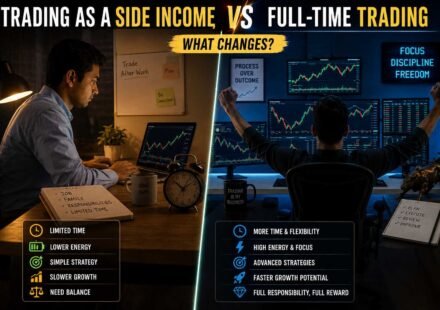
Trading as a Side Income vs Full-Time: What Changes

Going full-time does not fix a shaky strategy, it magnifies it. What actually changes psychologically when trading becomes your only income.
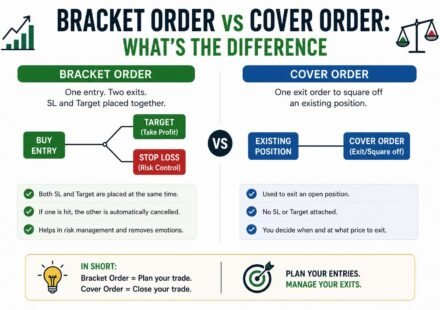
Bracket Order vs Cover Order: What’s the Difference
A plain-English breakdown of bracket orders and cover orders, how each one actually works, and when a trader would use one over the other.

Averaging Down: Why It Feels Smart and Rarely Is
Averaging down feels like a discount, not a mistake. Here is the mechanism that makes it so tempting, why it usually backfires, and when it is not the same as revenge trading.

Trading With Family Money: The Extra Pressure No One Talks About
Trading family money is not the same as trading your own. It changes your risk tolerance, your decisions, and your stress. Here is why, and what to do about it.

Capital Protection vs Capital Growth: Getting the Balance Right
Protect too hard and you never grow. Grow too fast and you blow up. How experienced traders actually balance capital protection against capital growth.

How to Size a Trade When You Are Not Confident
Low confidence usually means no trade or full-size trade, with nothing in between. Here is a third option that actually keeps you in the game.

The 1% Rule: Why It Works and Why Traders Break It
The 1% rule is simple math but traders break it constantly. Why it works, why discipline alone does not keep it, and how to actually make it stick.

Why You Risk More on Trades You Are Sure About
Feeling certain about a trade makes you size it bigger, and that is exactly when it hurts the most when you are wrong. Why this happens and how to fix it.

Risk Management Rules That Actually Get Followed
Most risk management rules fail not because they are wrong, but because they are too complicated to follow under pressure. Here is a set that survives contact with a live trade.

Position Sizing: The Fix for Most of Your Emotional Trades
Most discipline problems are sizing problems in costume. The formula, the three-part cap, and why halving your size fixes behaviour willpower cannot.