

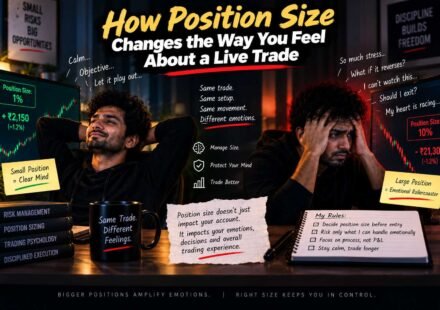
How Position Size Changes the Way You Feel About a Live Trade

The same setup feels completely different at 1 lot versus 3 lots. Here is why position size changes your emotions, not just your risk.

Why a Winning Month Makes Your Next Month Worse
A great trading month often sets up a bad one right after it. Here is the mechanism behind post-winning-streak overconfidence, and how to protect the next month.

Averaging Down: Why It Feels Smart and Rarely Is
Averaging down feels like a discount, not a mistake. Here is the mechanism that makes it so tempting, why it usually backfires, and when it is not the same as revenge trading.

How to Size a Trade When You Are Not Confident
Low confidence usually means no trade or full-size trade, with nothing in between. Here is a third option that actually keeps you in the game.

The 1% Rule: Why It Works and Why Traders Break It
The 1% rule is simple math but traders break it constantly. Why it works, why discipline alone does not keep it, and how to actually make it stick.

Why You Risk More on Trades You Are Sure About
Feeling certain about a trade makes you size it bigger, and that is exactly when it hurts the most when you are wrong. Why this happens and how to fix it.

Risk Management Rules That Actually Get Followed
Most risk management rules fail not because they are wrong, but because they are too complicated to follow under pressure. Here is a set that survives contact with a live trade.

Position Sizing: The Fix for Most of Your Emotional Trades
Most discipline problems are sizing problems in costume. The formula, the three-part cap, and why halving your size fixes behaviour willpower cannot.

Trading Anxiety: How to Stay Calm Under Live Market Pressure
Racing heart, checking the position every 30 seconds, no sleep before expiry. Why trading anxiety happens and the changes that actually reduce it.

Demo Account Works, Real Money Does Not. Here Is Why
Profitable on paper, losing live, same strategy. The four things that change when money is real, and how to close the gap without more backtesting.