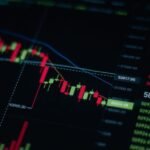
During a choppy, uncertain market like this one, every tick on your screen feels important. A sharp move up feels like proof you should buy. A sharp move down feels like proof you should sell. Most of the time, neither feeling is correct, because most of what you are watching is noise, not signal.
This post explains the real difference between market noise and market signal, and gives you a practical way to tell them apart while you are actually trading, not just reading about it later.
What noise actually is
Market noise is price movement that comes from short term, random factors rather than any real shift in value or trend. It includes small trades bumping the price around, algorithms reacting to each other, and traders overreacting to headlines that will not matter in a week. Noise is not fake or made up. The price moves really did happen. They just do not carry much useful information about where the market is actually heading.
The tricky part is that noise looks exactly like signal while it is happening. There is no flashing light on your screen that says “ignore this move.” You can only tell the difference by stepping back and asking better questions, not by staring harder at the same chart.
What signal actually is
Signal is price movement connected to something real, such as a genuine shift in buying or selling pressure that is likely to continue, a confirmed break of a level that many other traders are also watching, or a change supported by more than one piece of evidence at the same time. Signal tends to hold up over slightly longer timeframes, not just one or two candles.
A useful habit is to ask whether the same move shows up if you zoom out to a higher timeframe. Noise often disappears or looks tiny once you zoom out. Signal usually still looks meaningful even on a slower chart.
Why uncertain markets produce more noise, not less
When markets are calm and trending clearly, noise still exists, but it is easier to ignore because the overall direction is obvious. During an uncertain, choppy period, like the kind that follows a sharp correction, noise becomes louder relative to signal. More traders are reacting to each other out of nervousness, and fewer moves are backed by a clear, confirmed reason.
This is exactly the period where traders make the most reactive mistakes, because every small move feels urgent. Recognizing that noise is naturally higher right now, simply because of the environment, is already half the battle.
A three question check before reacting to any move
Before changing your position because of a sudden price move, ask three questions. Does this move hold up on a higher timeframe, or does it disappear? Is there more than one independent reason behind this move, or just one headline or one rumor? Would I still care about this move if I had not been staring at the screen when it happened?
If the move fails all three questions, treat it as noise and do nothing. If it passes two or three, it may be worth paying closer attention to, though still within your existing plan, not as a reason to abandon it.
How IPO hype and news headlines blend into the noise
Big news events, including a heavily hyped stock listing, add an extra layer of noise on top of the usual chop. A loud headline makes a random price move feel meaningful simply because everyone is talking about it at the same time. This is the same mechanism covered in more detail in the post on how social media hype around an IPO affects your decisions, and the same three question check works just as well there.
The volume of chatter around an event tells you how many people are watching it. It does not tell you whether the price move behind it is signal or noise. Those are two completely separate things, and mixing them up is one of the most common mistakes during a hyped news cycle.
Build a personal noise filter over time
You will get better at separating noise from signal the more you track your own reactions, not by reading more articles about it. Keep a short note each time you react strongly to a price move. Write down what you felt, what you did, and a day or two later, whether the move turned out to matter at all.
Over a few months, this simple habit builds a personal pattern. You will start to notice which kinds of moves you personally tend to overreact to, which is far more useful than a generic rule, because your own noise patterns are specific to you.
Separate how loud a move feels from how important it is
Loudness and importance are not the same thing, but during a choppy market they often get confused. A move that comes with a lot of chatter, alerts, and excited messages feels important simply because of the volume of attention around it. A quieter move, with far less noise around it, can sometimes be the one that actually matters more for your plan.
Before reacting, try rating the move on two separate scales, how loud the chatter around it feels, and how well it holds up against your three question check. Keeping these two ratings separate in your mind helps stop the volume of noise from being mistaken for the strength of the signal.
Frequently Asked Questions
Can noise ever turn into signal later?
Yes. A move that starts as random noise can sometimes be followed by real, confirmed signal later. The mistake is treating the early, unconfirmed move as if it were already the confirmed one.
Does more experience make it easier to spot noise?
It helps, but experience alone is not enough. Even experienced traders need a clear process, like the three question check above, because the feeling of urgency during noise does not go away just because you have traded for years.
Should I just ignore the news completely to avoid noise?
No. Ignoring information is not the same as filtering it well. The goal is to read the news calmly and separate what it tells you from how it makes you feel, not to cut yourself off from information.
Is this investment advice?
No. Samir Dash is not SEBI-registered, and this article shares general psychology and decision-making concepts, not a recommendation about any specific product, provider, or strategy. Please read the Disclaimer before acting on anything you read here.
Shor sunna aasan hai, asli sanket samajhna thoda ruk kar hi aata hai.
Finding it hard to tell real signal from market noise lately? I run a free live session twice a week for traders with two or more years of experience who know the setups but still cannot execute under pressure. Register for the next free session here.
I am Samir Dash, founder of Mindful Trading Hub. I work with experienced traders on live market decision-making. More about my story here.