

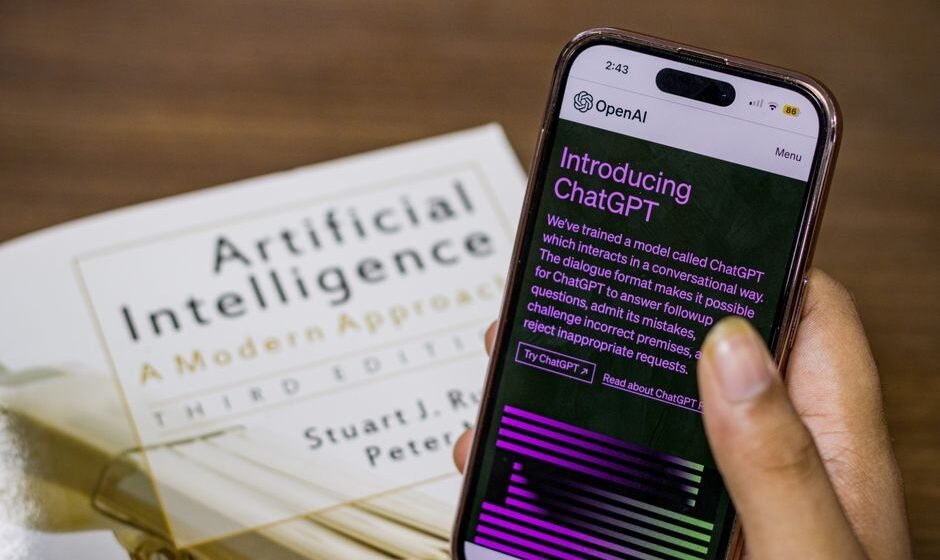

Traders ask this question often, usually expecting a clear winner. There is not one. Claude and ChatGPT are both general purpose AI chat tools, and neither one was built to predict stock prices or guarantee trading returns. What they differ on is more subtle: how they handle long documents, how they reason through multi-step questions, and how they draw on broad outside knowledge. None of this should be mistaken for either tool having an edge in forecasting markets.
This comparison is based on general patterns reported by many users across different tasks, not on a controlled scientific benchmark that anyone ran for trading specifically. Treat it as a rough guide for choosing a tool for a task, not as proof that one is objectively better at trading.
Neither tool can predict the market, full stop
This needs saying before anything else. Both tools are built on large language models trained on text. They do not have a live feed into the market’s future, and they cannot calculate tomorrow’s price with any real accuracy, no matter how confidently worded their answer sounds. If you ask either one for a specific future price target, you are getting a guess dressed in fluent language, not a forecast backed by real predictive power. The comparison below is about research, writing, and analysis tasks around trading, not about which tool calls the market better. Neither does.
Where Claude tends to be strong: long documents and careful reasoning
Many users report that Claude handles long pieces of text well, such as a full earnings call transcript, a lengthy annual report, or a stack of your own journal entries pasted in at once. It tends to track details across a long document without losing the thread, and it often works through multi-step reasoning in a way that shows its steps clearly, which makes it easier to check its logic.
For a trader, this can be useful for tasks like summarizing a long regulatory filing, comparing two lengthy documents side by side, or walking through a multi-step calculation such as position sizing across several scenarios. The strength here is in handling volume and nuance in text, not in any special access to market data or forecasting ability.
Where ChatGPT tends to be strong: broad knowledge and quick synthesis
ChatGPT is often praised for pulling together broad general knowledge quickly, drawing connections across many fields, and giving fast, confident answers to a wide range of questions. For a trader, this can be useful when you want a quick explainer on an economic concept, a plain language summary of how a certain type of financial instrument works, or a first pass at brainstorming angles on a topic before you dig deeper elsewhere.
This breadth is a real strength for general research and learning tasks. It is not the same thing as market insight, and a wide general knowledge base does not translate into an ability to tell you what a stock will do next week.
Document and data analysis in practice
If your task involves feeding in a large file, such as a CSV of your own trade history or a long PDF report, you may notice a difference in how much the tool can hold onto at once and how carefully it tracks small details across that file. This varies by the specific product version and plan you are using, and it changes over time as both tools are updated, so a comparison that was true a year ago may not hold today.
Rather than relying on general reputation alone, it is worth testing both tools yourself on the actual document you plan to use regularly, such as your own broker statement or your own journal export. Give both tools the exact same file and the exact same question, and compare the two answers side by side. This kind of direct test on your own real material is more useful than any general claim about which tool is “better.”
Writing and explaining trading concepts
Both tools are reasonably good at explaining a trading concept in plain language, drafting a note for a trading plan, or helping you rewrite a messy set of rules into something clearer. Differences here tend to be about tone and style rather than accuracy. Some users find one tool’s writing style more natural for their purposes than the other, but this is a matter of preference, not a measurable advantage for trading decisions.
If you plan to use either tool to help write trading rules, journal templates, or review checklists, the output from both is only as good as the instructions you give. A vague request like “help me trade better” will produce a vague answer from either tool. A specific request with your actual rules, your actual constraints, and a clear question will produce a far more useful answer, regardless of which tool you choose.
How to actually decide which to use
Rather than picking a side based on online opinions, a more practical approach is to match the tool to the specific task in front of you. If you are working through a long document or a multi-step calculation where you want to check the reasoning step by step, it may be worth trying Claude first. If you want a fast, broad answer on a general topic, or want to brainstorm quickly across many ideas, ChatGPT may feel more natural. Many traders end up using both for different parts of their process, since both are widely available and the cost of trying each on a real task is low.
Whichever tool you choose, the same limit applies to both. Use them for research, writing, organizing your own notes, and explaining concepts. Do not use either one as a source of market predictions or trading signals, because that is simply not what either tool is built to do, and any confident sounding prediction either one gives you is not backed by real forecasting ability.
Frequently Asked Questions
Can Claude or ChatGPT predict stock prices better than the other?
No. Neither tool can predict market prices or guarantee returns. Any price prediction either tool gives is a guess, not a verified forecast, regardless of which tool produced it.
Is this comparison based on a real test or just general opinion?
This article reflects general patterns reported by users across many tasks, not a controlled scientific benchmark run specifically for trading tasks. Results can vary by version, plan, and the specific task you give the tool.
Should I pay for a premium plan on either tool for trading research?
That depends on how often you use the tool and for what. Test the free or lower tier version on your real tasks first, such as your own documents, before deciding a paid plan is worth it for you.
Can I use both tools together?
Yes, many people use different tools for different tasks, such as one for long document review and another for quick general questions. There is no rule against using more than one.
Is this investment advice?
No. Samir Dash is not SEBI-registered, and this article explains general concepts, not a recommendation about any specific product, provider, or strategy. Please read the Disclaimer before acting on anything you read here.
Dono tools alag kaam ke liye achhe hain, lekin market ka faisla aap khud hi lenge.
Have you tried both tools on the same trading document and compared the answers side by side? I run a free live session twice a week for traders with two or more years of experience who know the setups but still cannot execute under pressure. Register for the next free session here.
I am Samir Dash, founder of Mindful Trading Hub. I work with experienced traders on live market decision-making. More about my story here.


