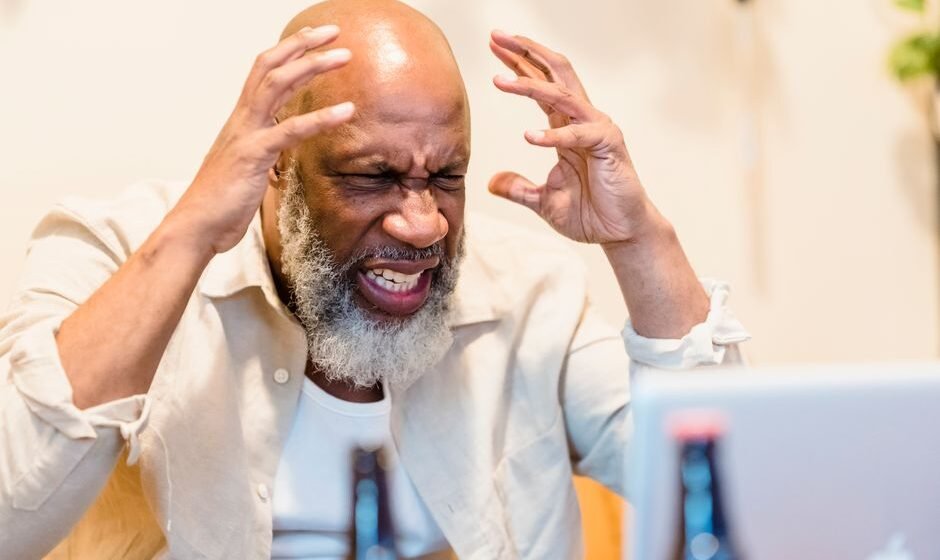

Mindfulness for traders means noticing what is happening in your body and mind while a trade is live, before that state turns into an action you did not plan.
That is the whole definition. It has nothing to do with incense, silence, or sitting on the floor for an hour. A trader who checks in with their own state at 9:20 am, notices their jaw is tight and their size is already bigger than usual, and adjusts before the bell rings, is practising mindfulness. A trader who meditates for an hour every morning but has no idea their hands are shaking when a trade goes against them is not.
This is the pillar post for this topic. It covers what mindfulness actually is in a trading context, why it is different from just “staying calm,” and how it fits inside the ACE framework.
The common misunderstanding
Most traders hear “mindfulness” and picture one of two things. Either a meditation app with a soft voice, or a vague instruction to “be present” that nobody explains further.
Both pictures miss the actual mechanism. Mindfulness is not a mood. It is a skill of noticing. Specifically, it is the skill of noticing three things while they are happening, not after:
- What is happening in your body (tight chest, shallow breathing, clenched jaw, restless legs).
- What thought just passed through your head (the story you are telling yourself about this trade).
- What action you are about to take, before you take it.
None of this requires calm. You can be mindful while anxious. In fact, that is usually when it matters most. The point is not to remove the anxiety. The point is to see it clearly enough that it does not silently decide your next click.
Why this matters more in trading than almost anywhere else
In most jobs, a bad emotional moment costs you an awkward email or a short temper in a meeting. You can apologise later and the damage is contained.
In trading, a bad emotional moment costs money immediately, and the market gives you no time to reconsider. You feel a spike of fear or excitement, and within seconds your finger is on the buy or sell button. There is no gap between the feeling and the consequence unless you build one yourself.
That gap is exactly what mindfulness creates. Not a long pause. A gap of two or three seconds, where you notice the state you are in before you act from it.
Mindfulness inside the ACE framework
ACE stands for Aware, Control, Execute. Mindfulness is the engine behind the first step, Aware.
- Aware. You notice your body, your thoughts, and the urge to act, all in real time, before you move.
- Control. Once you have noticed, you choose a response instead of reacting automatically. This is where your rules, stops, and checklists come in.
- Execute. You take the action you actually planned, not the one your nervous system wanted to take three seconds ago.
Without Aware, Control and Execute do not work. You cannot control a state you have not noticed. This is why traders who know every rule in their playbook still break them under pressure. The rules were never the problem. The gap in noticing was.
What mindfulness looks like during a live trade
Here is a concrete example, not a philosophy.
You are long Bank Nifty futures. Price drops 40 points against you in three minutes. Your stop is still 20 points away. Without mindfulness, here is what typically happens: a wave of heat in your chest, a thought like “this is going to keep falling,” and your hand moves to close the position early, before your stop, breaking your own rule.
With mindfulness, the sequence looks different. You feel the same heat in your chest. You notice it. You notice the thought “this is going to keep falling” and recognise it as a thought, not a fact. You check where your actual stop is. You let the stop do its job, because that is what it is there for.
The market event was identical in both cases. The only thing that changed was whether you saw your own reaction before it became your decision.
“My stop is at this level. What I am feeling right now is not new information about the market.”
Mindfulness is not the same as suppressing emotion
A common mistake is trying to use mindfulness to feel nothing. That is not the goal, and it usually backfires. Suppressed feelings tend to come back later, often at a worse moment, like after three losing trades in a row.
The actual skill is closer to labelling than suppressing. You name what is happening: “this is fear,” “this is the urge to average down,” “this is excitement about being right.” Naming a state, even silently in your head, has a calming effect on its own. It moves the experience from something that is driving you to something you are looking at.
How to start building this skill
You do not need an hour a day. You need short, repeated practice, because mindfulness is built the same way any skill is built, through repetition in small doses.
- Before the market opens. Spend two minutes noticing your breath and any tension in your body. This sets a baseline for what “normal” feels like, so you can spot when you drift from it later.
- Between trades. A short check-in, ten seconds, on your body and your last thought. See The 5-Minute Mindfulness Reset Between Trades for a full version of this.
- During a live position. Practice noticing without acting. Just observe the urge to check your phone, move your stop, or add size, without doing it yet.
- After the session. Ask yourself which moments today you noticed clearly, and which ones you only understood in hindsight. This trains the noticing muscle for tomorrow.
If you want a specific, structured daily practice to build this on, see How to Start Meditating as a Trader (Even 10 Minutes a Day). Meditation is one tool that trains mindfulness. It is not the only way to practice it, but it is the most reliable one.
A quick way to check if you are already doing this
Most traders overestimate how mindful they already are. Here is a fast way to check, using your last full trading week.
- Pick your three worst trades from the week. For each one, ask: did I notice a change in my body or my thinking before I entered, or only after the trade was already losing?
- If the honest answer is “only after” for two or more of those three trades, your noticing is happening too late to be useful. This is common, not unusual, and it is exactly what deliberate practice fixes.
- Now pick your best-managed trade of the week, win or lose, one where you followed your plan exactly. Ask the same question. Traders who already have some mindfulness skill usually find they noticed something, tension, an urge, a doubt, before acting on that trade, even if they could not have named it clearly in the moment.
This simple review, done weekly, is often more useful early on than any formal practice, because it shows you exactly where your own noticing gap sits right now, rather than treating mindfulness as an abstract goal.
What changes once this becomes a habit
Traders who build this skill do not stop feeling fear, greed, or frustration. Those are normal responses to real money moving. What changes is the size of the gap between the feeling and the action.
A trader without this skill goes from feeling to acting in under a second. A trader with this skill has two or three seconds where the feeling is visible before it becomes a decision. Those two or three seconds are where every rule, every stop, and every plan actually gets to do its job.
Frequently asked questions
Is mindfulness the same as meditation?
No. Meditation is a specific practice, usually done sitting still with your eyes closed, that trains the skill of noticing. Mindfulness is the skill itself, and you can apply it anywhere, including live in front of your trading screen.
Do I need to be calm to trade well?
No. You need to notice your state, calm or not, before you act from it. Some of the best trading decisions happen while a trader is still nervous. The nervousness is not the problem. Acting from it without noticing is.
How long does it take to see a difference?
Most traders notice a small shift within two to three weeks of daily short practice, usually first in how quickly they catch themselves about to break a rule. The gap between feeling and action widens gradually, not overnight.
Can mindfulness replace risk management rules?
No, and it should not try to. Mindfulness helps you follow the rules you already have. It does not replace a stop loss, a position size cap, or a daily loss limit. Think of it as the skill that makes those rules usable under pressure.
What if I notice my state but still act on it anyway?
That is normal early on. Noticing is the first skill, and acting differently is a second skill built on top of it. Even noticing without changing your action is progress, because it gives you data for tomorrow’s rules.
The real point
Mindfulness for traders is not a mood or a lifestyle. It is the specific, trainable skill of seeing your own state before it turns into a click.
The market does not reward better predictions. It rewards better decisions, and better decisions start with noticing what is actually happening inside you, not just on the chart.
Jab tak khud ko nahi dekhoge, market ko sahi nahi dekh paoge.
Related reading:
- How to Start Meditating as a Trader (Even 10 Minutes a Day)
- How to Make Calm Decisions While a Trade Is Still Open
- Vipassana Meditation: What It Actually Teaches Traders
- How to Know You’re Actually Out of a Drawdown, Not Just Lucky
Want to break this loop properly? I run a free live session twice a week for traders with two or more years of experience who know the setups but still cannot execute under pressure. Register for the next free session here.
I am Samir Dash, founder of Mindful Trading Hub. I work with experienced traders on live market decision-making. More about my story here.