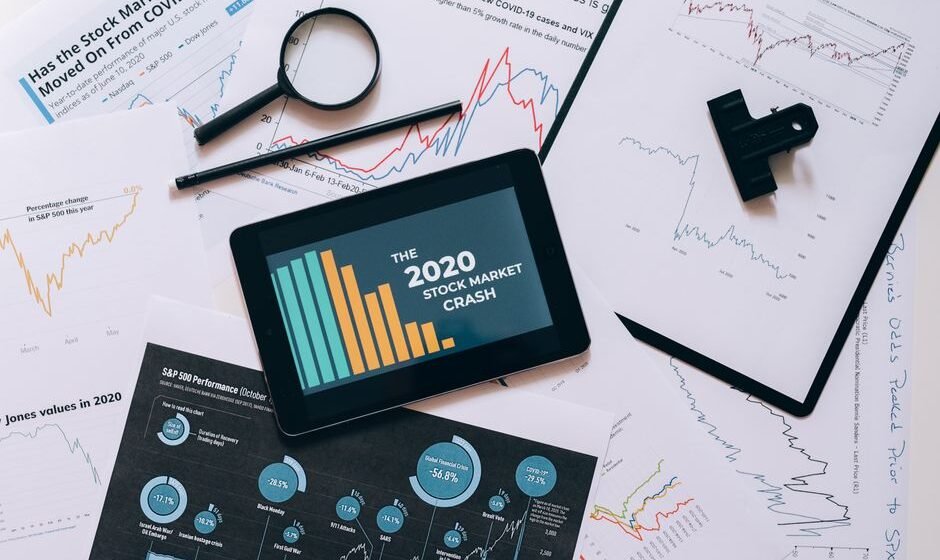

Market crashes share a common feature, sharp fear driven declines, but the causes and speed of different crashes can vary a great deal. The COVID 19 crash of March 2020 is a useful case to compare against other well known market declines, including the ones caused by the Harshad Mehta and Ketan Parekh scandals, even though the underlying causes were completely different.
What made the COVID crash unusual
The COVID crash stands out mainly for its speed. Sensex fell roughly 38 percent from its January 2020 high of around 42,273 to its March lows within about two months. Single day declines of about 8.18 percent for Sensex and about 8.3 percent for Nifty on 12 March 2020, followed by another especially sharp day on 23 March 2020 with Sensex closing around 25,981, show how compressed this decline was compared to many historical downturns, which often unfold over many months or years rather than weeks.
This compressed timeline also meant less opportunity for markets to find a stable footing along the way. A slower decline can sometimes include periods of partial recovery that give investors and institutions time to adjust gradually. The COVID crash offered far less of that kind of breathing room, which is part of why the experience of living through it felt so relentless for many market participants.
A fraud driven crash versus a global shock
The Harshad Mehta scam of 1992 and the Ketan Parekh scam of 2001, covered in our post on the 1992 scam and our post on the 2001 scam, were driven by specific financial fraud involving banking loopholes and concentrated manipulation of a limited group of stocks. The COVID crash had a completely different origin, a sudden global health crisis that disrupted economic activity everywhere at once, not a scheme involving particular stocks or particular people.
This difference matters for how each kind of crash should be understood after the fact. A fraud driven crash raises questions about trust, oversight, and accountability within the financial system itself. A shock driven crash like the COVID crash raises different questions, mainly about how resilient an economy and its markets are when faced with an external disruption that nobody inside the financial system caused or could have directly prevented.
Breadth of impact
This difference in cause led to a difference in breadth. The 1992 and 2001 scandals, while they shook overall market confidence and caused broad declines once each scheme unwound, had their roots in a specific small group of stocks and specific institutions. The COVID crash affected essentially every sector and every major market worldwide simultaneously, since the underlying cause, a global pandemic, did not respect any particular industry or country.
This broad reach is one of the clearest ways to distinguish the two kinds of events. A fraud driven crash, however serious, tends to hit hardest the companies and investors directly caught up in the specific stocks involved, while leaving much of the rest of the market relatively less affected in its initial shock. A global shock like the pandemic left almost nowhere for investors to hide, since the disruption touched nearly every part of the economy at once.
Speed of recovery expectations
Because the COVID crash was driven by an external shock rather than a structural fraud that had to be unwound and investigated, the general expectation among many market participants was that recovery could happen once the immediate shock passed and policy responses took hold, which we discuss in general terms in our post on why the recovery happened. Recovery from fraud driven crashes like 1992 and 2001 involved a longer process of legal proceedings, investigations, and rebuilding institutional trust, which does not resolve on the same kind of timeline as a shock to global economic activity.
Rebuilding trust after a fraud is a genuinely slow process, because it depends on convincing market participants that the specific gap that was exploited has actually been closed, not just that time has passed. A shock driven crash does not carry this same burden of rebuilding trust in the system itself, since the system was not the cause of the disruption in the first place, which is part of why these two kinds of events can follow very different paths afterward.
What stayed the same across all these crashes
Despite very different causes, all three events shared a common emotional pattern. Sharp, fast price declines create intense pressure to react immediately, often leading to decisions driven by fear rather than reasoning. Whether the underlying cause was fraud, as in 1992 and 2001, or a global health emergency, as in 2020, the psychological experience for an individual trader watching their portfolio fall sharply shares real similarities.
Why comparing crashes carefully matters
It would be a mistake to treat every crash as following the same script just because the emotional experience feels similar. The specific cause of a crash matters enormously for understanding how it might unfold and resolve. Lumping fraud driven crashes together with shock driven crashes risks drawing the wrong lessons about timing or likely recovery patterns. Understanding what actually caused a given decline is the first and most important step before drawing any conclusions about how it might unfold, and that single step is often skipped in the rush to find a simple takeaway, leaving traders with a tidy story instead of an accurate one, which can quietly set the wrong expectations heading into the next period of market stress.
Frequently asked questions
Was the COVID crash caused by fraud like the Harshad Mehta scam?
No. The COVID crash was driven by a global pandemic disrupting economic activity worldwide, while the Harshad Mehta and Ketan Parekh scandals were driven by specific financial fraud involving banking loopholes and stock manipulation.
Which crash was faster, COVID or the 1992 and 2001 scandals?
The COVID crash’s decline from peak to trough happened within about two months, a notably fast timeline. The exact speed of decline in the 1992 and 2001 cases varies by source and is harder to pin to a precise short window.
Do all market crashes recover the same way?
No, recovery patterns depend heavily on the underlying cause. We are not citing specific recovery timelines for any of these events in this comparison.
Can I use this comparison to predict the next crash?
No, this post is a historical comparison for educational purposes only. Samir Dash is not a SEBI-registered investment advisor, and nothing on this blog is investment advice, for specific financial decisions, consult a SEBI-registered advisor. Read the full disclaimer.
Har crash ki kahani alag hoti hai, lekin dar ka ehsaas aksar wahi rehta hai.
Want to fix the decision-making gap that no strategy course ever covers? Join Samir Dash’s free masterclass on trading psychology and decision-making under pressure: Reserve your free seat here.
Samir Dash is the founder of Mindful Trading Hub, helping experienced traders build the discipline to trade consistently. Learn more at samirdash.in.