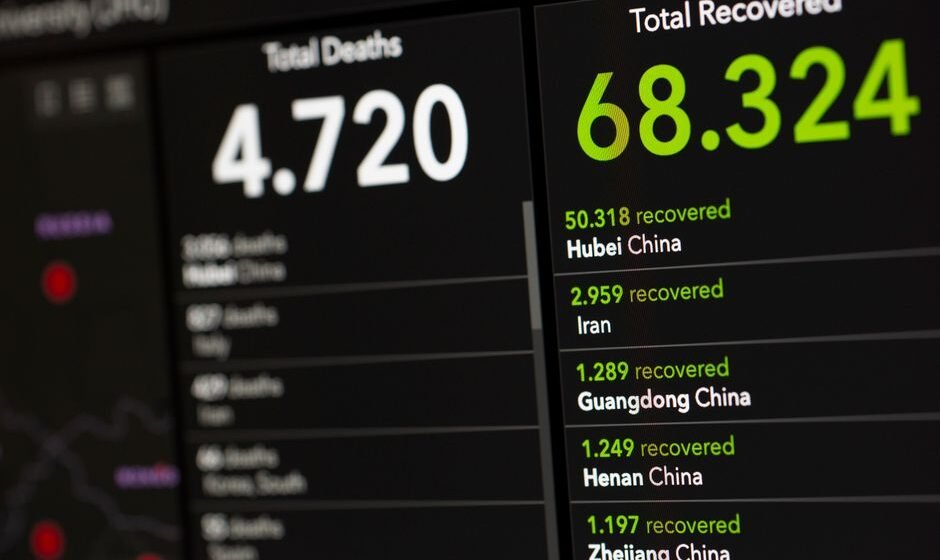

One of the most talked about features of the COVID 19 market crash of March 2020 is how it was followed by a recovery that surprised many market watchers. We covered the fall itself in our main post on the COVID crash. This post focuses on the general reasons behind the recovery, without citing specific recovery dates or percentages, since those are not precisely confirmed across available sources.
Why speed matters here
The COVID crash stood out for how quickly it happened, with Sensex falling roughly 38 percent from its January 2020 high to its March lows within about two months. A crash that happens fast, driven by a sudden external shock rather than a slow buildup of structural problems in the economy, tends to invite a different kind of response from policymakers and markets than a slower, deeper structural downturn.
When a decline is caused by something structural, like years of excessive borrowing across an economy, fixing the underlying problem often takes a long time, because the imbalance itself took a long time to build up. A shock driven decline, by contrast, is more about a sudden disruption to normal activity, which can in principle resolve faster once the disruption itself eases, even though nobody can know in advance exactly how long that will take.
The role of central bank action
Central banks around the world, including India’s Reserve Bank, responded to the crisis with measures generally aimed at keeping credit flowing and supporting confidence, broadly including interest rate cuts and steps to keep liquidity available in the financial system. These kinds of actions are a common policy response during a sharp market shock, intended to prevent a short term panic from turning into a longer lasting credit freeze.
A credit freeze, where banks and lenders become unwilling to extend credit even to otherwise healthy businesses, can turn a temporary shock into a much deeper and longer lasting economic problem. By acting quickly to keep credit flowing, central banks were generally aiming to prevent this kind of secondary damage from compounding on top of the original disruption caused by the pandemic itself.
Government stimulus measures
Governments in India and globally also introduced stimulus measures during this period, generally aimed at supporting businesses and individuals through the sudden economic disruption caused by lockdowns. These measures, combined with central bank action, are broadly understood to have supported market sentiment during a period that could otherwise have seen a much longer, deeper downturn.
Stimulus measures of this kind generally work by putting money directly into the hands of businesses and individuals who might otherwise have had to cut spending sharply, or by covering costs that businesses could not meet during a period of disrupted activity. The scale of government and central bank response to this particular crisis, across many countries at once, was itself an unusual feature of this period compared to many earlier downturns.
Why markets can move ahead of the real economy
A general principle worth understanding is that stock markets often price in expectations about the future, not just current conditions. Once investors began forming a view that the worst of the shock would eventually pass, prices could start reflecting that expectation even while the real economy was still struggling. This gap between market behavior and the immediate economic situation is a recurring feature of market recoveries generally, not unique to this one event.
This forward looking behavior is sometimes confusing to people outside the market, since it can mean stock prices start rising even while news reports about the real economy remain largely negative. Understanding this gap is useful for traders, because it explains why waiting for clearly positive economic news before acting can sometimes mean missing a meaningful part of a market’s recovery, which often begins while conditions on the ground still look difficult.
Liquidity chasing fewer available bargains
When markets fall sharply and fast, as happened in March 2020, a large number of stocks can end up priced well below where they were trading just weeks earlier. Combined with the liquidity support described above, this created conditions where available cash looking for a home had more reason to flow back into markets than to stay on the sidelines, a dynamic commonly discussed in relation to sharp recoveries after steep crashes.
It is worth being careful not to treat this as a mechanical rule that guarantees a bounce after every steep decline. Available cash will only flow back into a market if investors genuinely believe conditions are likely to improve, and that belief can take a long time to form after some kinds of crashes, particularly those driven by deep structural problems rather than a single identifiable shock, where that belief has much more rebuilding to do before it can form again. Each crash has its own character, and the speed of its recovery, if one comes at all, depends heavily on that character.
Why traders should be cautious drawing simple lessons
It is tempting to look back at this period and conclude that crashes always recover quickly, so panic is never worth it. That conclusion goes further than the facts support. Every crash has different causes, and the COVID crash’s specific combination of a sudden global health shock followed by large scale coordinated policy support is not guaranteed to repeat in exactly the same way in future downturns. We discuss the behavioral side of this more directly in our post on panic selling during the COVID crash.
Frequently asked questions
Why did markets recover after the COVID crash?
Broadly, central bank actions like rate cuts, government stimulus measures, and markets pricing in expectations about the future all played a role, though the exact pace of the recovery is not something we are citing precise figures for here.
Does a fast crash always mean a fast recovery?
No, that is not a safe general rule. The COVID crash had a specific combination of factors, including coordinated policy support, that is not guaranteed in every market downturn.
Did the Reserve Bank of India take action during this period?
Broadly, yes, central bank action globally and in India during this period generally included measures aimed at supporting liquidity and credit flow, though we are not citing specific rate figures here.
Should I expect every crash to recover like this one?
No, and this post should not be used to predict future market behavior. Samir Dash is not a SEBI-registered investment advisor, and nothing on this blog is investment advice, for specific financial decisions, consult a SEBI-registered advisor. Read the full disclaimer.
Market gira tez, aur wapas aaya bhi tez, lekin har baar aisa nahi hota.
Want to fix the decision-making gap that no strategy course ever covers? Join Samir Dash’s free masterclass on trading psychology and decision-making under pressure: Reserve your free seat here.
Samir Dash is the founder of Mindful Trading Hub, helping experienced traders build the discipline to trade consistently. Learn more at samirdash.in.