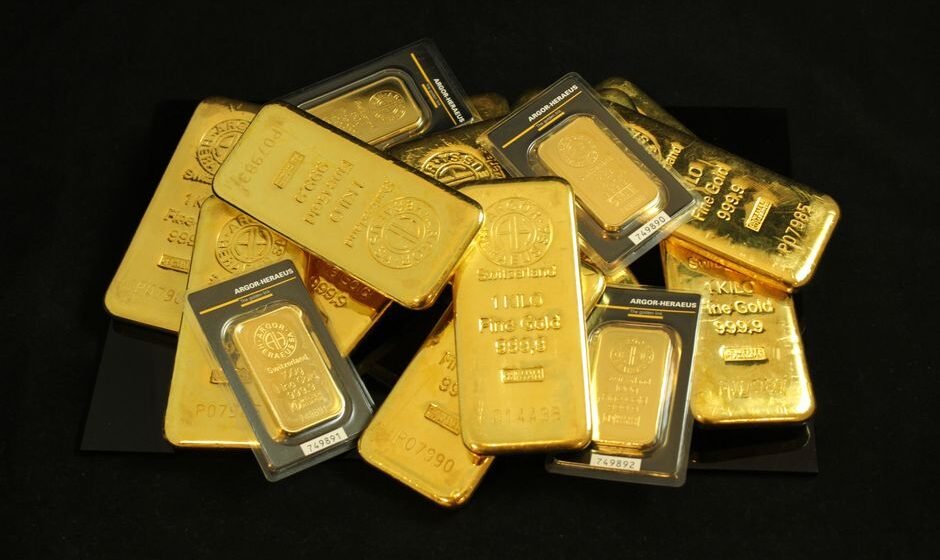

Whenever something unsettling happens in the world, be it a geopolitical conflict, a banking scare, or a sudden economic shock, gold prices tend to get a lot of attention. Financial media often calls gold a “safe haven,” but that phrase alone doesn’t explain why. This article breaks down the real, specific reasons gold tends to behave this way, in plain language, without hype.
What “Safe Haven” Actually Means
A safe haven asset is something investors turn to when they want to protect the value of their money during periods of fear, uncertainty, or crisis, even if that asset doesn’t offer the highest possible return during calm, stable periods. The core idea is capital preservation over growth, specifically during the periods when preservation matters most.
Gold has held this role for a very long time, across many different cultures and economic systems, for reasons that are rooted in its basic physical and historical properties, not just investor sentiment or tradition alone.
Reason One: Gold Is Not Tied to Any Single Country or Currency
Most financial assets, stocks, bonds, cash itself, carry some dependency on a specific government, company, or currency performing well. A stock depends on a company’s business surviving and thriving. A government bond depends on that government being able to repay its debt. Cash depends on the issuing country’s economic and political stability holding up and that currency not losing significant value.
Gold does not depend on any of these things. It is not a liability or promise issued by any government or company, it is a physical commodity with intrinsic, globally recognized value, used in jewelry, industry, and as a store of value for thousands of years across virtually every major civilization. During periods when trust in a specific currency, government, or financial institution is shaken, gold’s independence from all of those systems is exactly what makes it attractive. Investors aren’t betting gold will perform spectacularly; they’re seeking an asset whose value doesn’t depend on the specific thing currently causing fear.
Reason Two: Gold Historically Holds Value Against Inflation
Because gold is a physical commodity in limited supply, rather than something a government can create more of simply by policy decision, it has historically tended to hold its purchasing power better than currency over long stretches of high inflation. When inflation is rising sharply and eroding the value of cash and fixed-income investments, gold is often sought out as a way to preserve purchasing power, since its value is not denominated in any single currency the same way a bank deposit or bond is.
This connection is particularly relevant during stagflationary periods, when both inflation is high and growth is weak at the same time, a combination explained in detail in this explainer on stagflation, since that combination tends to be especially difficult for both stocks and bonds, leaving gold as one of the few assets historically associated with holding up reasonably well through that specific combination.
Reason Three: Gold and the US Dollar Have an Inverse Relationship
Gold is globally priced in US dollars, which creates a mechanical relationship between the two. When the dollar weakens against other major currencies, gold typically becomes cheaper to buy for investors holding other currencies, which tends to increase demand and push gold’s dollar price higher. When the dollar strengthens, the opposite tends to happen.
This means gold’s price isn’t purely a reflection of fear or uncertainty by itself, it is also heavily influenced by the dollar’s own strength or weakness at any given time, which in turn is influenced by US interest rate policy and global capital flows. This is why gold prices can sometimes behave in ways that seem to contradict a simple “fear equals higher gold” assumption, because the dollar side of the equation is moving at the same time and can partly offset or amplify the fear-driven demand.
Reason Four: Central Banks Themselves Hold and Buy Gold
Gold is not just a retail investor or jewelry demand story. Central banks around the world hold significant gold reserves as part of their official foreign exchange reserves, alongside currencies like the US dollar. Central bank buying or selling activity, driven by their own reserve diversification strategies, adds another layer of steady, large-scale demand that influences gold prices over time, separate from short-term investor sentiment.
How Investors Actually Use Gold in a Portfolio
Rather than buying physical gold, many investors and traders use financial instruments like gold futures to gain exposure to gold price movements, often specifically as a hedge against other risks in their portfolio. The mechanics of using gold futures for this purpose, including the specific risks involved, are explained in this explainer on hedging with gold futures.
Gold demand, especially in India, also has well-documented seasonal and cultural patterns tied to festivals and wedding seasons, which adds another layer to gold price behavior beyond pure macro uncertainty. These patterns are covered in this explainer on seasonal trends in gold trading.
Is Gold a Guaranteed Safe Haven Every Single Time?
No, and this is an important nuance that often gets lost in casual commentary. Gold’s behavior during any specific crisis depends on several overlapping factors at that moment, including what is happening to the dollar, what is happening to interest rates, and how severe and how global the specific crisis is. There have been periods where gold did not rise as much as expected during a stressful event, particularly if that same event was also pushing the dollar sharply higher or if interest rates were rising sharply at the same time, since those forces work against gold even as fear-driven demand works in its favor. Gold is best understood as a long-standing tendency, strongly supported by its basic properties, not a mechanical guarantee in every single situation.
Gold’s Role in India Specifically
Gold occupies a particularly important place in Indian households, well beyond its role as a financial safe haven asset. For generations, Indian families have held physical gold, in the form of jewelry and coins, as a store of value passed down across generations, as a form of savings outside the formal banking system, and as an integral part of cultural and religious traditions tied to weddings and festivals. This cultural demand creates a steady, deeply embedded source of gold demand in India that exists somewhat independently of the global macro uncertainty factors discussed earlier in this article.
This dual nature of gold demand in India, part global safe-haven asset and part deeply rooted cultural store of value, means that gold prices in India can sometimes be influenced by both global uncertainty and domestic factors like the wedding season calendar or festival timing, at the same time. Understanding both layers gives a fuller picture of why gold behaves the way it does specifically within the Indian market, rather than relying purely on the global safe-haven story alone. India’s own relationship with gold, including how its import policies and currency movements interact with gold prices, adds yet another domestic layer worth understanding separately from the purely global drivers covered above.
How Gold Compares to Other Safe Haven Assets
Gold is not the only asset investors turn to during periods of uncertainty, and it’s worth briefly understanding how it compares to its main alternatives. Government bonds from financially stable countries are another common safe haven choice, offering a known, fixed return and the backing of a government’s ability to repay its debt. The key difference is that a bond’s value is still tied to a specific currency and a specific government’s creditworthiness, while gold’s value is not tied to either, which is precisely why some investors hold both, for slightly different kinds of protection.
Certain stable currencies, held in cash or short-term deposits, are also sometimes used as a safe haven during periods of regional uncertainty, since a currency backed by a historically stable economy can hold its value relatively well compared to a currency facing acute local pressure. However, currencies still depend on the stability and policy choices of the country issuing them, which is a dependency gold simply does not carry. This is part of why many long-term investors view gold as a complement to these other safe haven options rather than a direct substitute for them, each covering a slightly different type of risk within a broader, diversified approach to protecting a portfolio during uncertain periods.
Frequently asked questions
Does gold always go up when stock markets fall?
Not always, though the two have shown a tendency to move in opposite directions during many periods of market stress, since fear-driven demand for gold often rises at the same time stock markets fall. This relationship is not perfectly consistent across every single downturn.
Why is gold priced in US dollars globally?
This is largely a historical convention, rooted in the dollar’s long-standing role as the world’s primary reserve currency and the currency most global commodity trading has historically been settled in, including gold.
Is physical gold better than gold futures or gold-backed instruments?
Each comes with different trade-offs around storage, liquidity, costs, and ease of buying and selling, and the right choice depends on your specific goal, whether that’s long-term holding, trading exposure, or hedging. This is a decision worth discussing with a SEBI-registered investment adviser for your specific situation.
Does gold protect against every type of economic crisis?
No single asset protects against every type of crisis equally well. Gold has a strong historical track record during specific types of uncertainty, particularly currency instability and high inflation, but its behavior during other types of shocks can vary.
Should I buy gold right now because of current global uncertainty?
This article is for general education only and is not investment advice. Any decision to buy gold, and how much of your portfolio it should represent, should be made with a SEBI-registered investment adviser based on your own goals and risk capacity, not a single news cycle.
Sona chamakta hai dar ke waqt, lekin tumhara dimaag shaant rehna chahiye har waqt.
Related reading:
- Contrarian Investing Explained
- OPEC+ Oil Supply Decisions and Why Traders Watch Them
- The Petrodollar System Explained
- Deglobalization Explained: Is the World Trading Less With Each Other?
- The Eurobond Market Explained
- Payment for Order Flow, Explained Plainly
- Stock Market Index Weighting Methods Explained
Want to learn this from the source? I run a free live session twice a week for traders with two or more years of experience who know the setups but still cannot execute under pressure. Register for the next free session here.
I am Samir Dash, founder of Mindful Trading Hub. I work with experienced traders on live market decision-making. More about my story here.