

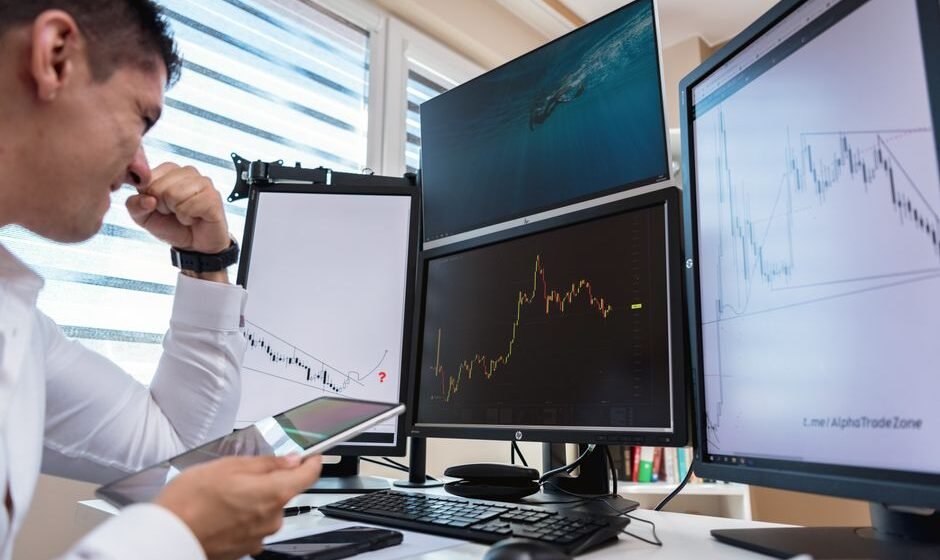

Most traders assume mindfulness is something for people who are new to the market and still nervous about every trade. The opposite is closer to the truth. The traders who need it most are the ones who have been at this for two, three, five years, who already know the setups cold, and who still cannot execute consistently.
This post explains why experience without mindfulness creates a very specific, very expensive kind of trap, and why adding this skill matters more the longer you have been trading, not less.
The trap that only shows up after a few years
A beginner’s problem is usually knowledge. They do not know what a good setup looks like, so their losses are often just bad information turning into bad trades. Once they read enough, backtest enough, and take enough screen time, that gap closes.
An experienced trader’s problem is different, and it is quieter. They know exactly what a good setup looks like. They can spot it on the chart in seconds. And they still take the trade too early, or too big, or hold past the stop, because knowing the setup and managing the state you are in while trading it are two completely separate skills.
This is why so many traders with real technical skill plateau at the same place for years. They keep sharpening a skill, chart reading, that was never the bottleneck. The bottleneck moved to something they never trained.
Why experience does not fix this on its own
There is a common assumption that time in the market naturally builds emotional control, the way time in a job builds competence. For some skills that is true. For managing your state under live financial pressure, it usually is not, unless you are deliberately training it.
Here is why. Every other skill in trading gets practised directly. You backtest strategies, so pattern recognition improves. You review charts, so setup identification improves. But nobody spends deliberate time practising noticing their own body and mind while a trade is live, because it does not feel like “real” trading work. It feels like something separate, maybe even unnecessary.
The result is a trader with five years of chart experience and zero hours of deliberate state-awareness practice. The chart skill compounds. The state-awareness skill stays exactly where it was on day one.
The specific ways this shows up in experienced traders
- The A+ setup taken with C-grade sizing. The trader saw the setup clearly. They just did not notice they were still frustrated from an earlier loss, so the size came out wrong.
- The stop that gets moved “just this once.” The technical analysis was fine. What was missing was noticing the hope creeping in before the hand moved the stop.
- The good week that gets given back in one bad day. Confidence builds, attention to state drops, and a run of wins quietly turns into overconfidence nobody noticed forming.
- The trade taken from boredom on a slow day. The setup criteria were technically met on a stretch, because restlessness was looking for a reason to act, not because the market handed one.
In every example, the technical skill was not the failure point. The failure point was a state that went unnoticed until it had already shaped the decision.
Why this gets more expensive with experience, not less
A beginner with small size and small confidence makes small mistakes. An experienced trader has larger size, more confidence, and more capital at risk, all earned legitimately over years. When the same unnoticed-state problem hits a bigger position, the cost scales with it.
This is the uncomfortable part. The years of experience that should make a trader safer can actually make the cost of this gap larger, because everything else about their trading, including the size they are comfortable putting on, has grown while the state-awareness skill stayed flat.
“I know this setup. I have traded it fifty times. Why did I still do that?”
That question, asked by traders with real skill after a real mistake, is the single clearest sign that the missing piece is not more chart knowledge. It is mindfulness.
What mindfulness adds that technical skill cannot
Technical skill answers the question “is this a good trade.” Mindfulness answers a different question that technical skill was never designed to answer: “am I in a state where I can execute this well right now.”
These two questions need different tools. You cannot backtest your way to the second one. You build it the same way you built chart reading, through repeated, deliberate practice, just aimed at your own internal state instead of the price chart. See Mindfulness for Traders for what this practice actually looks like day to day.
Why this is not “soft” or optional
Some experienced traders resist this because it sounds less rigorous than technical analysis. In practice, it is the opposite. A trader who has spent three years building excellent setups and never spent one hour building state-awareness is running an unbalanced system. Half the machine is refined. The other half is running on whatever untrained reactions happen to show up that day.
The traders who close this gap are not adding something soft on top of their technical edge. They are fixing the actual limiting factor. This is the difference between mindful trading and reactive trading, and it tends to matter more, not less, as your size and experience grow.
A story that plays out the same way for most experienced traders
Here is a pattern that shows up again and again in traders with three to five years of screen time. Year one and two are spent building technical skill, reading books, backtesting, following mentors. Somewhere around year three, the technical skill plateaus at “good enough,” and the trader can consistently identify solid setups. Results, however, stay inconsistent, sometimes a strong month, sometimes a month that gives back three months of gains in a week.
At this point, most traders do one of two things. Either they keep adding more technical knowledge, a new indicator, a new strategy, a new market, hoping the next piece of information will finally close the gap. Or they conclude they simply lack discipline, and try to white-knuckle their way through it with willpower alone.
Both paths tend to stall at the same plateau, because neither addresses the actual bottleneck. More technical knowledge does not build state-awareness. Willpower without a trained noticing skill tends to hold for a few weeks and then break under enough pressure. The traders who move past this plateau are usually the ones who identify state-awareness as a distinct, trainable skill and start working on it directly, the same deliberate way they once worked on chart reading.
How to start closing this gap
- Track, for two weeks, every trade where the setup was correct but the execution was not. Write down what state you were in beforehand: tired, frustrated, overconfident, bored.
- Look for a pattern in that list. Most traders find that 70 to 80 percent of their execution mistakes cluster around two or three specific states.
- Build a short check-in before you trade, aimed specifically at those two or three states, not a generic “how am I feeling” question.
- Treat this practice with the same seriousness you treat your backtesting. It is not a side activity. It is the other half of your edge.
Frequently asked questions
Isn’t mindfulness more useful for beginners who are anxious about every trade?
Beginners do feel more anxiety, but their core problem is usually a knowledge gap, which experience and study fix directly. Experienced traders already have the knowledge. Their gap is in noticing their own state, which experience does not automatically fix, and often does not touch at all.
I have been trading five years and never worked on this. Is it too late?
No. State-awareness is a trainable skill at any stage, the same way chart reading was trainable when you started. Five years of technical skill is not wasted, it is the foundation this skill gets added onto.
How do I know if this is actually my problem?
If you can point to specific trades where you knew the setup was wrong to take, or the size was wrong, or the stop should not have moved, and you did it anyway, that is the signature. Knowledge was present. Execution failed anyway.
Does this replace risk management rules?
No. It makes your existing rules usable under pressure. A stop loss rule you cannot follow when frustrated is not a working rule. Mindfulness is what lets the rule actually function in the moment it is needed.
How long before this shows up in results?
Most traders see a shift within three to four weeks of deliberate daily practice, first in how often they catch a mistake before making it, rather than after.
The real point
Experience builds your ability to read the market. It does not automatically build your ability to read yourself. The traders who close that second gap are the ones who finally stop losing to trades they already knew were wrong.
Chart padhna aa gaya, ab khud ko padhna seekho.
Related reading:
- How to Start Meditating as a Trader (Even 10 Minutes a Day)
- How to Make Calm Decisions While a Trade Is Still Open
- Vipassana Meditation: What It Actually Teaches Traders
Want to break this loop properly? I run a free live session twice a week for traders with two or more years of experience who know the setups but still cannot execute under pressure. Register for the next free session here.
I am Samir Dash, founder of Mindful Trading Hub. I work with experienced traders on live market decision-making. More about my story here.